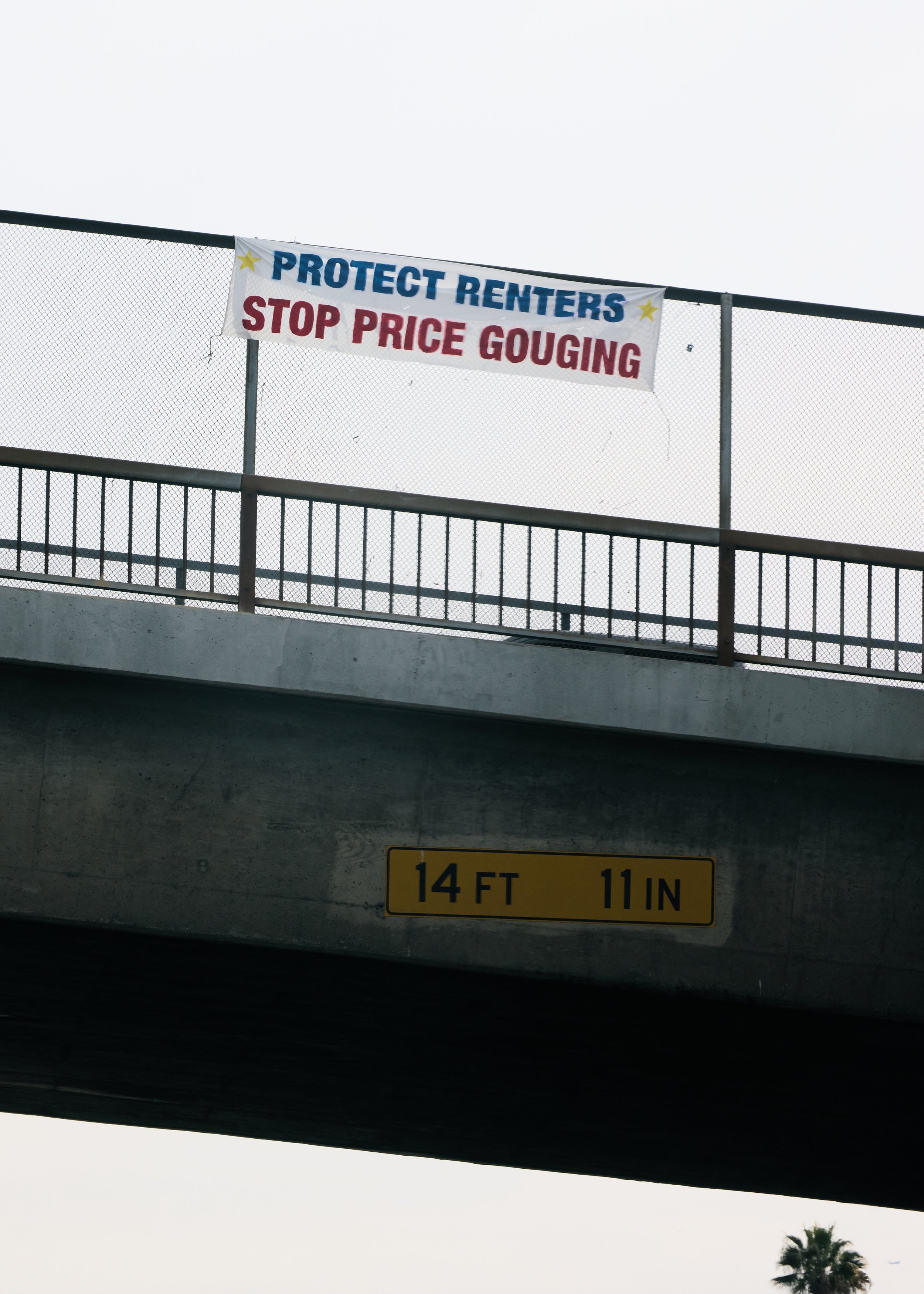
The Rent Brigade grew out of a crisis and a crowdsourced response. After the LA wildfires began in January 2025, displaced families were hit not only by destruction, but by predatory rents and sharply limited affordable options to rehouse themselves. In those first chaotic weeks, a simple spreadsheet—Tracking Rental Price Gouging in LA—became a hub for crowdsourced evidence of illegal rent gouging by landlords and property owners. Outraged by what we were witnessing, hundreds of Angelenos came together to comb through listings on Zillow and document price hikes that appeared to violate California Penal Code 396, which prohibits rent increases of more than 10% during a declared state of emergency. The effort quickly grew beyond data gathering as dozens of volunteers, then hundreds, united to create a more deliberate push for accountability.
From this initial mobilization emerged The Rent Brigade. Several of us believed that if we could keep organizing around this work we could hold property owners more accountable and protect people who had already suffered so much. We continued to gather data and conduct research, publishing reports that synthesized our crowdsourced findings, mapped the geography and scale of rent gouging, and identified top rent gougers. We built an automated tool to track Zillow listings and identify more than 18,000 cases of probable rent gouging. Our work informed policy advocacy, helping secure higher fines for rent gouging in LA County, establishing a private right of action for victims, and authorizing the Los Angeles County Department of Consumer and Business Affairs to issue fines directly to landlords who gouge (instead of waiting for a District Attorney who’s been unwilling to press charges). We also pushed for transparency measures at the city level when enforcement stalled.
Today, The Rent Brigade continues to document rent gouging, but our work has broadened in scope as the housing crisis has intersected with other forms of economic and state violence facing renters across Los Angeles. In June, we joined the Evict ICE Not Us coalition to oppose ICE presence in Los Angeles and defend immigrant households from eviction, and conducted research showing that ICE activities drove significant income loss for affected families, often pushing already rent-burdened households closer to displacement. We are also working with local and national allies to fight Trump’s HUD proposal to evict immigrants from Section 8 and public housing. This next phase of our work reflects what we have learned since those early wildfire days. Preventing displacement requires sustained organizing to challenge the policies and practices that make housing insecurity possible, and to ensure that recovery and stability are not reserved only for those who can afford them.